
When Vogue Says It’s Not Cool to Have a Boyfriend, Did They Consider Book Boyfriends?
Why women are opting out of dating but falling harder for fictional men. A cultural deep dive into the book boyfriend phenomenon.
Somewhere between the rise of “boyfriend fatigue,” the slow death of dating apps, and the cultural soft-launch of celibacy as a lifestyle choice, the narrative around relationships has noticeably shifted. We’re being told, increasingly, that having a boyfriend is no longer the ultimate marker of desirability or emotional success. Independence is in. Solitude is aspirational. Emotional self-sufficiency has become the new cultural currency.
And in many ways, that shift makes sense. Women are tired — not of intimacy itself, but of the labour that so often accompanies it. Tired of situationships disguised as depth. Tired of performing emotional coolness while quietly overanalysing mixed signals. Tired of relationships that require them to carry the emotional infrastructure while receiving the bare minimum in return. Opting out, in this context, doesn’t feel cynical — it feels protective.
But while fashion magazines debate whether boyfriends are culturally “out,” something else has been happening in parallel. Millions of women are still going home at night, getting into bed, and spending hours in the company of a man.
He just happens to be fictional.
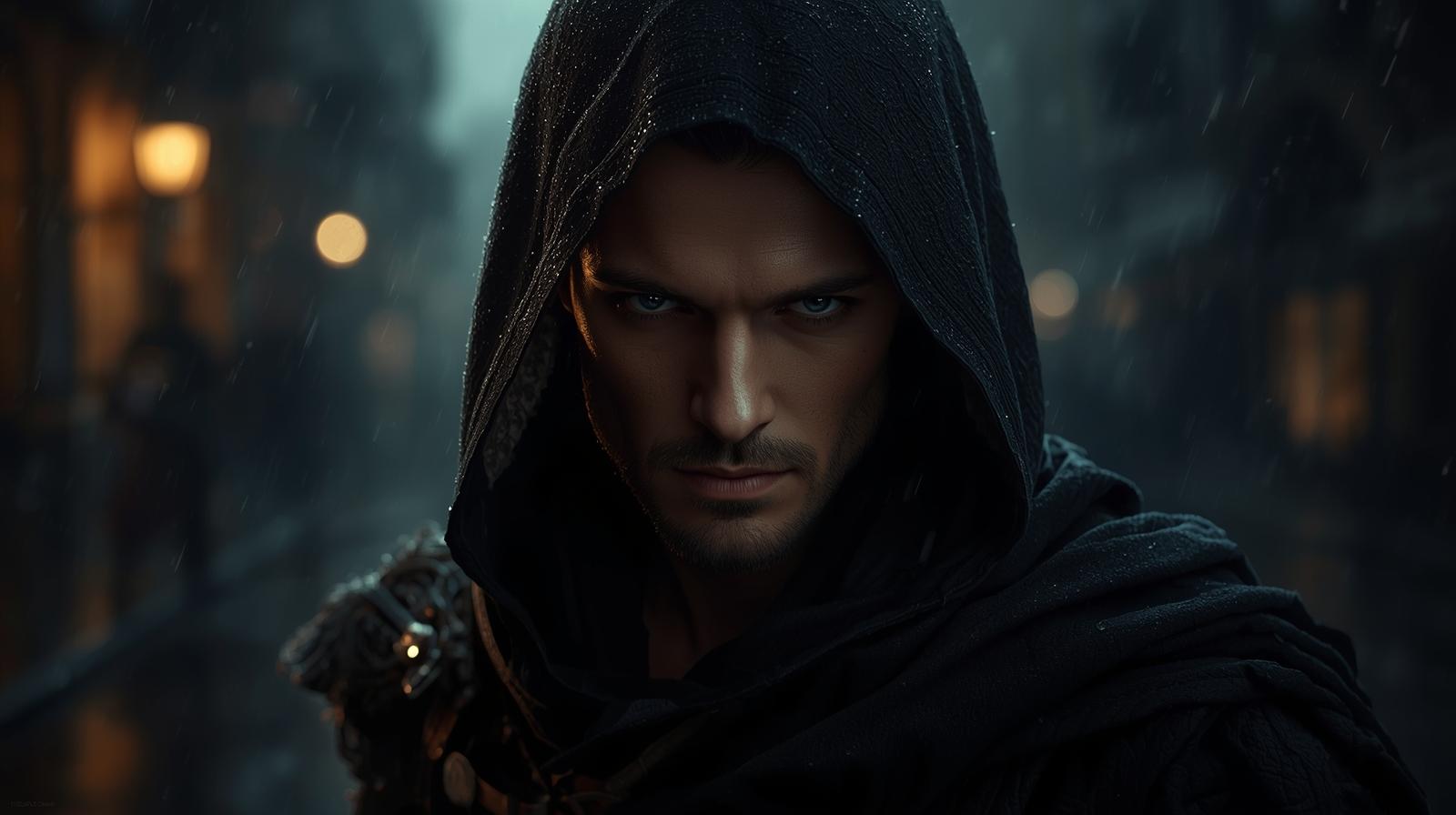
The book boyfriend — tall, devoted, emotionally articulate, frequently dangerous (where are my dark romance girlies at?) but exclusively to everyone except her — has become a defining figure of modern romantic imagination. And far from fading, his cultural stock is rising.
Because whether your personal taste leans toward the shadow-daddy persuasion or the soft, stab-someone-for-you variety, there is a fictional man currently occupying emotional real estate in your frontal lobe. He might look like a High Lord draped in night and devotion, or a battle-scarred general who worships the ground you walk on. He might be a college hockey player with golden retriever energy or a morally grey professor who absolutely should not be flirting with you across a desk — and yet.
Different aesthetic. Same outcome. Total emotional occupation.
At first glance, it would be easy to dismiss this as escapism. Fiction has always offered fantasy, after all — an exaggerated emotional world designed to distract from reality. But framing book boyfriends purely as fantasy misses something more revealing underneath. Because what if their appeal isn’t about escape at all? What if it’s about exposure?
Fictional men, particularly those written by women, are constructed around emotional fluency. They listen attentively. They communicate desire without embarrassment. They pursue with clarity rather than ambiguity. Their attraction is verbalised, affirmed, and sustained. They do not posture through detachment or mask vulnerability as indifference. Instead, they express devotion in ways that feel both emotionally and physically intentional.
And this emotional intentionality shows up across genres.
It’s there in the quiet steadiness of men like Kai, the kind who loves through action, patience, and unwavering presence. It lives in the slow-burn loyalty of characters like Leon, whose affection reveals itself through consistency rather than grandstanding. It exists in the unrelenting, slightly feral devotion of men like Rowan, whose entire emotional vocabulary becomes singularly focused once he chooses you.
Take away the fantasy settings — the crowns, the wars, the supernatural abilities — and what remains is surprisingly grounded. A partner who prioritises you. A partner who communicates. A partner who makes effort visible rather than implied. A partner who would do objectively unhinged things to make sure you know he’s your one and only.
This is where the conversation moves from romantic fantasy into something more culturally significant. Because once women immerse themselves in narratives where emotional attentiveness is the baseline, it inevitably reframes how they interpret real-world dynamics. It is not that fiction creates unrealistic expectations; rather, it clarifies what investment and presence can look like when they are fully realised.
In this sense, the rise of the book boyfriend carries a quiet feminist undertone. These characters are not written for the male gaze; they are written for the female interior world. They centre female pleasure without apology. They depict desire that is reciprocal, attentive, and reverent rather than transactional or performative.
Romance fiction, long trivialised as frivolous, becomes a space where women’s wants are taken seriously. Where their pleasure is prioritised. Where devotion is not framed as weakness but as strength. In a broader cultural landscape where women are still negotiating the legitimacy of their needs, that framing holds power.
It also helps explain why the fictional romantic economy feels, to many readers, more emotionally stable than the real one. In contemporary dating culture, ambiguity is often mislabelled as intrigue. Emotional withholding is reframed as mystery. Lack of effort is excused as fear of vulnerability. The result is a relational landscape that can feel inconsistent at best and emotionally extractive at worst.
By contrast, fictional men are written with narrative certainty. They love decisively. They commit loudly. They transform, sacrifice, and evolve in response to love. Their emotional availability is not treated as a liability but as an inevitability.
You see it in the way characters like Xaden carry devotion like armour. In the way men like Cassian love with their entire chest. In the way even the most morally questionable dark romance anti-heroes draw fiercely defined lines around the woman they love, offering obsession without ambiguity.
This contrast inevitably raises uncomfortable questions — not about the realism of fiction, but about the emotional standards women have been conditioned to accept outside it.
When women joke that books have “ruined real men,” the humour lands because it contains a kernel of truth. Not that real partners must compete with immortal warriors, mafia kings, or tattooed hockey players with suspiciously excellent communication skills, but that they are now being measured against emotional behaviours that feel intentional rather than accidental.
Seen through this lens, book boyfriends are less about replacing real relationships and more about recalibrating expectations within them. They function as imaginative case studies in what devotion, communication, and attentiveness look like when fully expressed.
So when glossy cultural commentary suggests that boyfriends are no longer aspirational, it feels like only half the story is being told. Women are not rejecting intimacy; they are rejecting emotional mediocrity. They are less willing to romanticise detachment when they have spent entire evenings immersed in narratives where love is expressed without hesitation.
The bar has not become impossibly high. It has simply been lifted from the floor.
And until real-world relationship dynamics evolve to meet that shift, women will continue to turn toward fictional men who offer emotional presence, narrative certainty, and desire that is never diluted by ambiguity.
Because if cultural trends are to be believed, boyfriends may be going out of fashion. But book boyfriends? They’ve never been more in style.

Photo Gallery
Your Membership, Your Way
Two ways to join, same full access to the catch-ups, the chaos, and the community. Go monthly for the slow burn or pay up-front and save a little. And don’t worry — no long-term commitment here. Stay as long as you’re loving it, cancel anytime.
Monthly Installments £10/month
Pay in Full £114/year (save 5%)
Still have questions? Here are the T&C's
.avif)
What our guests are saying about their stay
Pure magic! From the moment we arrived at the most breathtaking villa nestled in the rolling Tuscan hills, Meagan made sure every detail felt like it had been curated straight out of an Italian dream.
I attended the February Caribbean reading retreat and wish I could rate it higher than 5 stars! This was the best vacation I could have imagined. Not only was the resort amazing, the conversation and the ladies could not have been better.
I had such a lovely time on my retreat to Sicily. Megan is an amazing host who really looked after all of the group and made the trip feel like a fab holiday with friends. I went alone and everyone was lovely - I will happily book again next year. Book! You won't regret it.